

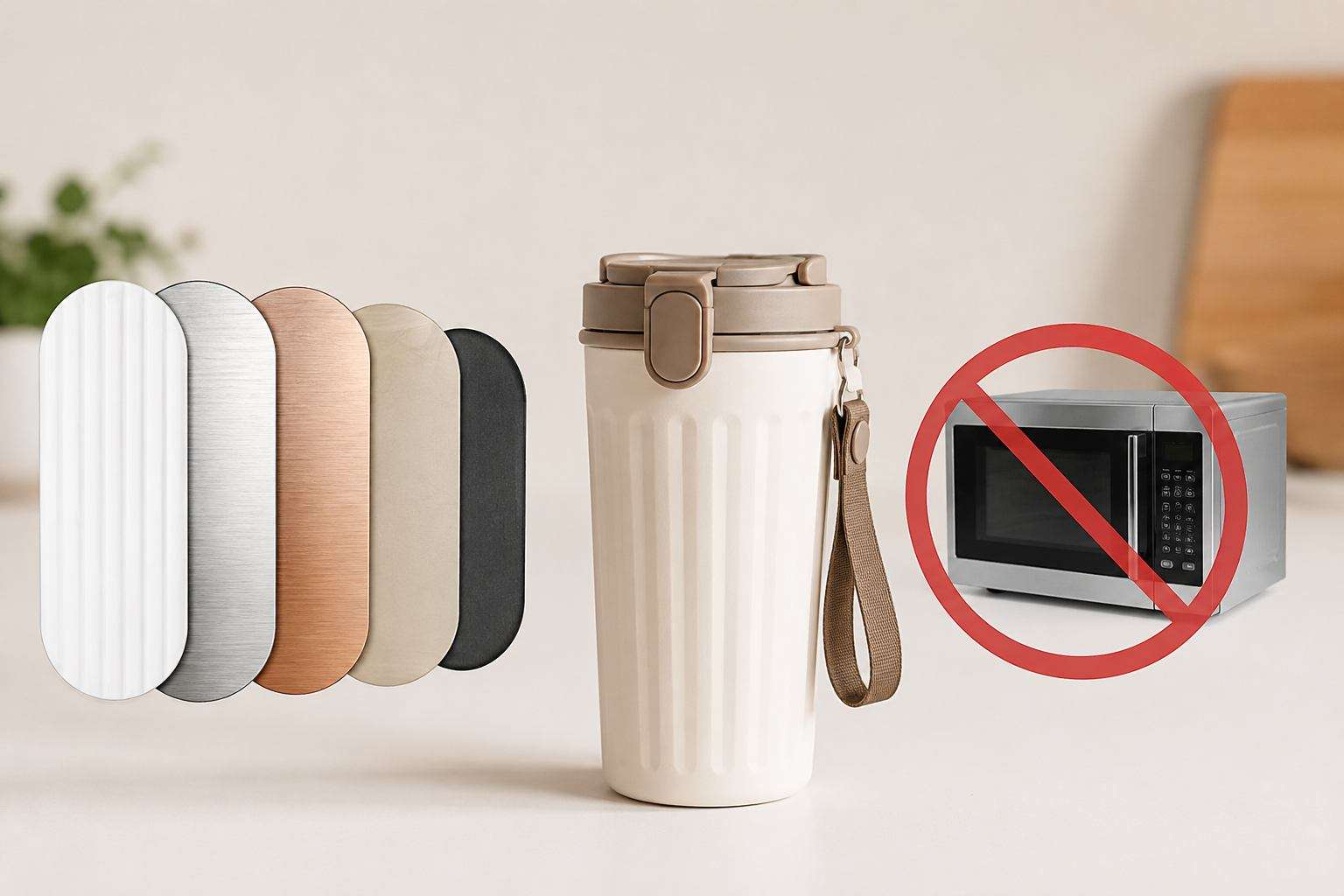
No you can't, because metal parts can spark and damage your microwave. The sealed vacuum can trap steam and burst. Heat can also warp or break the vacuum seal, ruining the insulation for good.
If you buy or sell stainless steel thermos cups, this is one of the most common safety questions customers ask. Here is the full picture, backed by real data.
A thermos cup is almost always made of stainless steel. Metal reflects microwave energy instead of absorbing it. When microwaves bounce off a metal surface, they can build up an electric charge. That charge can jump, or "arc," creating a visible spark.
The USDA warns that this kind of sparking, called arcing, can damage the appliance if it continues. In its own words on microwave safety, the USDA notes that prolonged arcing can harm both the oven and the container, but damage is unlikely if the microwave is stopped right away.
A thermos keeps drinks hot through a vacuum. This is a sealed gap of empty space between two walls. The vacuum blocks heat from moving in or out, which is why a good thermos holds temperature for hours.
Microwaves heat unevenly. Some spots get hot fast, while others stay cool. This uneven heating puts stress on the welded seams that hold the vacuum in place. Once that seal cracks, even slightly, the vacuum is gone. The thermos becomes an ordinary metal cup that can no longer hold heat well.
A sealed thermos with liquid inside has nowhere for steam to go. As the liquid heats unevenly, pockets of steam can build up pressure fast. If the lid is on tight, that pressure has no way to escape until you open it, or until the container fails on its own.
Thermos-style containers can and do fail in the real world. In one reported case, a Thermos-brand food container burst open in a school cafeteria, sending glass shards onto a student and her classmates. In two separate reports, owners of stainless steel Stanley thermoses said their containers released a cloud of fine black powder after the seal failed.
Some products on the market are labeled "microwave safe" even though they look like a thermos. This causes real confusion for buyers.
| Feature | True Vacuum Thermos | Microwave-Safe Food Jar |
| Insulation | Sealed vacuum gap | Foam, air gap, or none |
| Body material | Stainless steel (welded) | Plastic or glass liner |
| Heat retention | Excellent (many hours) | Weak to moderate |
| Microwave safe | No | Sometimes, if labeled |
A small number of designs use a removable plastic or glass liner inside a metal outer shell. The liner can go in the microwave on its own, since it is not part of the vacuum seal. A 2010 U.S. patent filing describes exactly this idea: a travel mug with a removable, microwave-safe liner, built specifically because standard thermos walls are not microwave or dishwasher safe. This is a clever workaround, but it is a different product category from a solid, welded vacuum thermos. Always check the bottom of the container for the microwave-safe symbol before assuming it is safe.
If you or a customer already ran a thermos through the microwave, act calmly and follow these steps:
Stop the microwave immediately if you see sparks or smell burning.
Do not open or touch the thermos right away. Pressure inside may still be high, and the metal may be very hot.
Let it cool for several minutes on a heat-safe surface.
Open the lid slowly, pointing it away from your face, in case pressure releases suddenly.
Check the microwave for scorch marks or damage near the turntable.
Inspect the thermos for warping, a loose seam, or a lid that no longer seals tightly. If you notice any of these, stop using it. A damaged vacuum seal will not hold temperature and may not be safe for hot liquids again.
Fill the empty thermos with boiling water and let it sit for five to ten minutes. Pour the water out, then add your hot food or drink right away. This warms the walls first, so the thermos is not pulling heat away from your meal.
Pour the contents into a microwave-safe glass, ceramic, or BPA-free plastic container. Heat it there, then pour it back into the preheated thermos and seal the lid.
For soups or hot drinks, reheating on a stove or in an electric kettle gives more even heat than a microwave, with no risk to the thermos at all.
Place the sealed thermos into a larger container of hot (not boiling) water. Let it sit for a few minutes. This gently warms the contents without opening the seal or using a microwave.
Temperature, not just time, decides food safety. The USDA and FDA both define a "danger zone" between 40°F and 140°F, where bacteria can double in number roughly every 20 minutes. Food should not sit in this range for more than two hours, or one hour if the surrounding temperature is above 90°F.
A well-preheated thermos filled with piping-hot food will usually stay above 140°F for several hours, which keeps it out of the danger zone. But once it cools below that point, the same two-hour rule applies as it would to any other container.
No. Most lids have metal springs, threads, or silicone seals that do not respond well to microwave energy, even if part of the lid is plastic.
Only products built with a separate microwave-safe liner, or made entirely from microwave-safe plastic or glass, qualify. A true stainless steel vacuum thermos is never microwave safe, regardless of brand.
No. Stanley, Yeti, Hydro Flask, and similar brands all use the same stainless steel vacuum design. The same risks apply across every brand.
Manufacturers add this warning because the metal body and vacuum seal are not built to handle microwave energy. Ignoring it can damage the appliance, the container, or both.
Turn off the microwave right away, let everything cool before touching it, and check both the appliance and the thermos for damage before using either again.
Never put a thermos cup in the microwave. The stainless steel body can spark, the vacuum seal can crack under uneven heat, and trapped steam can build dangerous pressure. Preheating the thermos with boiling water, then adding hot food or drink straight away, is the safest way to keep contents hot for hours without ever needing a microwave.
If you're sourcing thermos cups for resale or corporate use, understanding this limitation matters. Every stainless steel thermos cup is built for long-term heat retention through vacuum insulation, not for direct heating. Sharing this guidance with your own customers can prevent damaged products, damaged appliances, and unnecessary returns.